
MapReduce jobs, Hadoop clusters, language models and network graphs rarely turn up in one job description, yet they all turn up in one exam. That exam is D-AA-OP-23, the Dell Data Science Optimize certification, which validates that a data professional can move from raw distributed data to production-ready insight. Offered by Dell Technologies, this credential sits at the practical end of the analytics career ladder, where MapReduce jobs, Hadoop clusters, language models, and network graphs all have to work together. It is built for people who already write code and want proof they can optimize real workloads.
This article breaks the D-AA-OP-23 exam into its six official domains, explains what each one demands, and shows how the topics connect to daily data science work. You will find the exam format, the full domain weighting, focused study advice, and the career outcomes that make this Dell certification worth the effort.
Table of Contents
- What does the Dell Data Science Optimize certification prove?
- How is the D-AA-OP-23 exam structured?
- Which domains does the D-AA-OP-23 syllabus cover?
- How does MapReduce power large-scale data processing?
- What should you know about the Hadoop ecosystem and NoSQL?
- How does natural language processing fit into the exam?
- Why does social network analysis carry the most weight?
- Which data science theory and methods are tested?
- How do you turn analysis into clear data visualization?
- How should you prepare for the D-AA-OP-23 exam?
- What career paths open after earning this credential?
- Frequently asked questions
- Conclusion
What does the Dell Data Science Optimize certification prove?
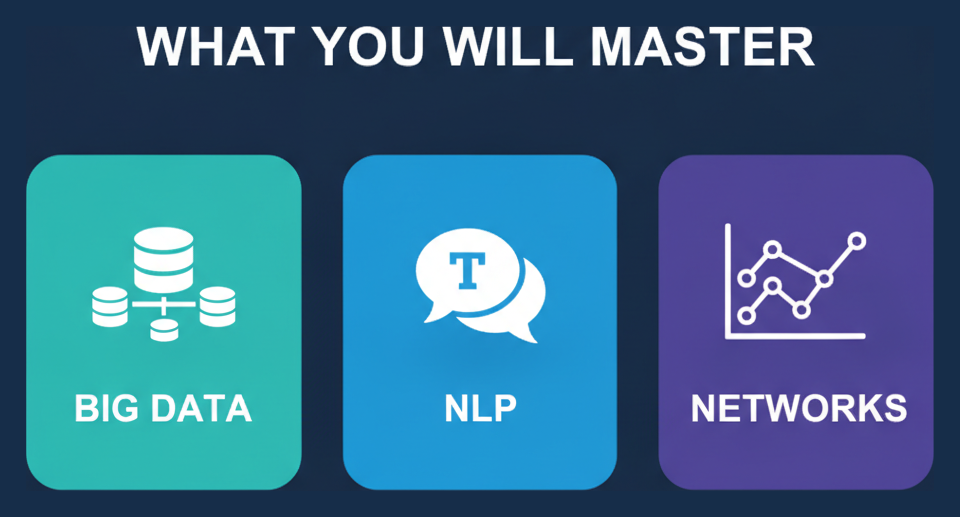
The Dell Data Science Optimize certification proves that you can optimize end-to-end analytics workflows across distributed systems. The D-AA-OP-23 exam confirms working knowledge of MapReduce, the Hadoop ecosystem, natural language processing, social network analysis, core statistical methods, and data visualization. It signals to employers that you handle the full pipeline, not just one modeling step in isolation.
Unlike entry-level analytics badges, this Dell Technologies credential assumes you already understand programming and statistics. The focus shifts toward scale and efficiency. Can you design a MapReduce job that finishes on time? Can you pick the right method for a messy, high-dimensional dataset? Those are the questions the exam rewards.
The credential is a strong fit for professionals who want recognition beyond a job title. It maps directly to the technologies that enterprise data teams run in production, so the validation carries weight in hiring and promotion conversations.
How is the D-AA-OP-23 exam structured?
The D-AA-OP-23 exam contains 60 questions and gives candidates 90 minutes to finish. The passing score is 63 percent, and the registration cost is $230 USD. Questions are scenario-driven, so memorizing definitions is not enough. You need to apply concepts to realistic data problems, which rewards hands-on practice over rote review.
The table below summarizes the core specifications you should plan around before booking a seat.
| Specification | Detail |
|---|---|
| Exam code | D-AA-OP-23 |
| Certification name | Dell Data Science Optimize |
| Number of questions | 60 |
| Duration | 90 minutes |
| Passing score | 63% |
| Exam cost | $230 USD |
With 90 minutes for 60 questions, you have roughly 90 seconds per item. That pace is comfortable if the material is familiar, but tight if you stop to reason through unfamiliar scenarios. Timed practice matters. Working through a realistic D-AA-OP-23 practice exam helps you calibrate speed and spot weak domains early.
Which domains does the D-AA-OP-23 syllabus cover?
The D-AA-OP-23 syllabus is divided into six weighted domains that span distributed processing, machine learning, and communication of results. Social Network Analysis carries the highest weight at 23 percent, followed by Natural Language Processing at 20 percent. The remaining four domains split fairly evenly, so no single topic can be safely ignored on exam day.
These weightings should shape your study hours directly. Spend more time where the exam invests more questions, then round out coverage across the lighter domains.
| Domain | Weight | Key topics |
|---|---|---|
| MapReduce | 15% | MapReduce framework implementation in Hadoop, HDFS, YARN |
| Hadoop Ecosystem and NoSQL | 15% | Pig, Hive, NoSQL, HBase, Spark |
| Natural Language Processing (NLP) | 20% | NLP and ambiguity categories, text preprocessing, language modeling |
| Social Network Analysis (SNA) | 23% | SNA and graph theory, communities, network problems and tools |
| Data Science Theory and Methods | 15% | Simulation, random forests, multinomial logistic regression, maximum entropy |
| Data Visualization | 12% | Perception and visualization, multivariate data visualization |
Notice how the blueprint pairs infrastructure skills with analytical ones. You are expected to run the cluster and interpret its output, which is exactly what the “Optimize” in the certification name refers to.
How does MapReduce power large-scale data processing?
MapReduce is the programming model behind large-scale batch processing on Hadoop, and it accounts for 15 percent of the D-AA-OP-23 exam. It splits a job into a map phase that filters and sorts data, then a reduce phase that aggregates the results. This split lets thousands of records be processed in parallel across a cluster with built-in fault tolerance.
For the exam, you should understand how MapReduce coordinates with the underlying platform components.
- HDFS stores input and output data in large blocks distributed across nodes.
- YARN schedules resources and manages containers that run map and reduce tasks.
- The framework handles data locality, shuffle, and recovery from failed tasks.
Optimization questions often ask how to reduce shuffle load, balance partitions, or avoid slow reducers. Knowing why a job runs slowly is as important as knowing how to write one. The Apache Hadoop framework documents the reference implementation you should study.
What should you know about the Hadoop ecosystem and NoSQL?
The Hadoop ecosystem and NoSQL domain is worth 15 percent of the D-AA-OP-23 exam and tests the tools that sit on top of core Hadoop. You need to know when to reach for Pig, Hive, HBase, Spark, or a NoSQL store, and how each one changes the performance profile of a data workflow. This is a practical, tool-selection domain.
How the ecosystem tools differ
Each tool solves a distinct problem, and the exam expects you to match the tool to the workload.
- Hive brings SQL-style querying to data stored in HDFS.
- Pig offers a scripting layer for building data pipelines.
- HBase provides low-latency random reads and writes over huge tables.
- Spark runs in-memory processing that is far faster than classic MapReduce for iterative jobs.
When NoSQL beats a relational store
NoSQL databases trade rigid schemas for horizontal scale and flexible data models. For high-volume, semi-structured data such as logs or clickstreams, they often outperform traditional relational systems. Spark, in particular, is central to modern analytics, and the official Apache Spark engine pages explain its libraries for SQL, streaming, and machine learning. Candidates who have built a Cloudera or similar cluster tend to find this domain intuitive; our Cloudera machine learning certification resource covers many of the same platforms.
How does natural language processing fit into the exam?
Natural language processing makes up 20 percent of the D-AA-OP-23 exam, the second-largest domain. It covers how machines interpret human text, starting with the categories of ambiguity that make language hard, moving through text preprocessing, and ending with language modeling. Because so much enterprise data is unstructured text, this domain reflects real demand in the field.
Text preprocessing fundamentals
Clean input drives good models. Expect questions on tokenization, stop-word removal, stemming, and lemmatization. You should also recognize how these steps affect downstream accuracy and why the order of operations matters for consistent results.
Ambiguity and language modeling
Human language carries lexical, syntactic, and semantic ambiguity, and the exam tests whether you can identify each type. Language modeling then assigns probabilities to word sequences so a system can predict or classify text. These are the standard definitions used across natural language processing, though exam specifics come from the syllabus itself.
Why does social network analysis carry the most weight?
Social network analysis is the heaviest domain on the D-AA-OP-23 exam at 23 percent, because graph-based thinking has become central to modern analytics. SNA studies relationships between entities using graph theory, where nodes represent actors and edges represent connections. From fraud rings to recommendation systems, network structure often reveals patterns that row-based analysis misses.
The syllabus focuses on three practical areas within this domain:
- Graph theory foundations such as nodes, edges, degree, and centrality measures.
- Community detection, which groups tightly connected nodes into meaningful clusters.
- Network problems and tools used to model, query, and visualize large graphs.
Centrality metrics are a frequent focus. Knowing which node is most influential, or which connection holds a network together, turns raw relationship data into a business decision. The open-source NetworkX graph library implements the core centrality metrics you should be comfortable interpreting.
Which data science theory and methods are tested?
The data science theory and methods domain is worth 15 percent of the D-AA-OP-23 exam and covers the statistical machinery behind predictive modeling. It includes simulation, random forests, multinomial logistic regression, and maximum entropy. These topics test whether you understand not just how to run a model, but why a given method fits a particular data problem.
Each method answers a different question, and the exam expects you to tell them apart.
| Method | Best used for |
|---|---|
| Simulation | Modeling uncertainty and generating synthetic scenarios |
| Random forests | Robust classification and regression on mixed features |
| Multinomial logistic regression | Predicting outcomes across more than two categories |
| Maximum entropy | Building probability models with minimal assumptions |
Random forests appear often because they are forgiving and widely deployed. Still, you should be able to explain trade-offs, such as interpretability versus accuracy, rather than defaulting to one favorite algorithm. Candidates coming from a broader machine learning background will find useful overlap with our AWS machine learning engineer guide.
How do you turn analysis into clear data visualization?
Data visualization accounts for 12 percent of the D-AA-OP-23 exam and closes the loop between analysis and decision. This domain covers human perception and how visual encoding influences understanding, along with techniques for presenting multivariate data. The goal is to communicate findings so stakeholders act on them, not just to produce a chart.
Strong visualization answers depend on a few principles the exam reinforces:
- Match the chart type to the data relationship you want to show.
- Respect perception, since position and length read more accurately than color or area.
- Reduce clutter so the main signal stays visible in dense, multivariate views.
Multivariate visualization is the harder skill here. Showing three or more variables at once, without overwhelming the reader, separates capable analysts from great ones. Expect scenario questions that ask which visual best fits a described dataset.
How should you prepare for the D-AA-OP-23 exam?
Preparing for the D-AA-OP-23 exam works best when you align study time with the domain weightings and practice on real tools. Because Social Network Analysis and Natural Language Processing together make up 43 percent of the exam, they deserve the largest share of your schedule. A structured plan beats scattered reading every time.
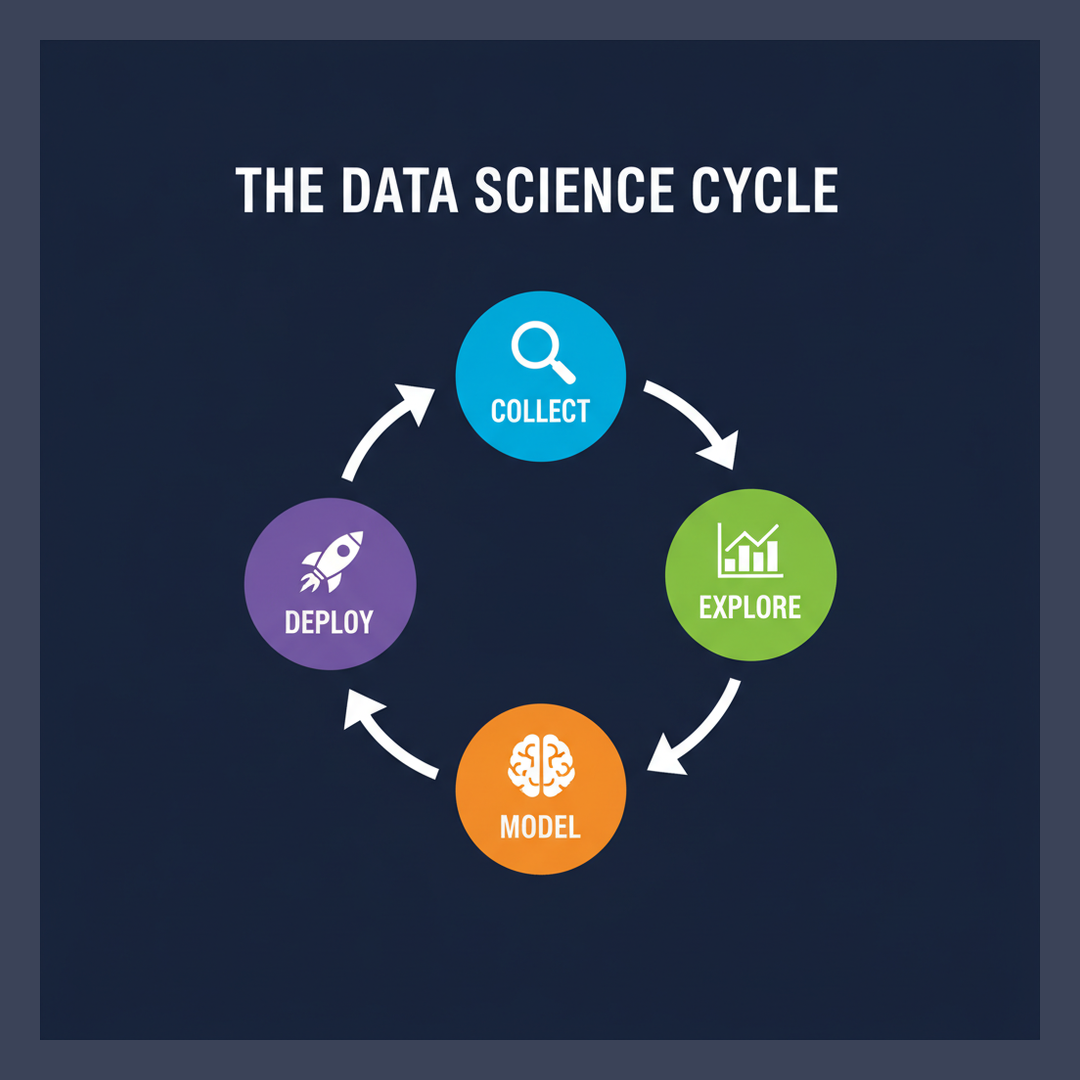
A practical study sequence looks like this:
- Review the six domains and rank them by your current confidence.
- Build a small Hadoop or Spark environment and run a MapReduce job end to end.
- Work through NLP preprocessing and a basic language model on sample text.
- Practice graph analysis with a community-detection example.
- Fit random forests and logistic regression models, then interpret the output.
- Take timed practice exams and review every missed question by domain.
Hands-on reps matter more than passive notes. Candidates who build even a modest cluster and model a few real datasets report far more confidence than those who only read summaries. Treat each weak domain as a mini project until the concept clicks.
What career paths open after earning this credential?
Earning the Dell Data Science Optimize certification supports roles that blend data engineering with applied analytics. Because D-AA-OP-23 spans distributed processing, machine learning, and visualization, it maps to jobs that need a full-stack data skill set. Employers reading the credential see someone who can both run the infrastructure and deliver the insight.
Common destination roles include:
- Data scientist, building and validating predictive models.
- Machine learning engineer, deploying models into production systems.
- Big data engineer, managing Hadoop and Spark pipelines at scale.
- Analytics consultant, translating data into business strategy.
These roles remain in strong demand as organizations invest in data platforms. The certification pairs well with adjacent credentials, so many professionals stack it with cloud or platform-specific badges to broaden their reach. For official program details, the Dell Technologies certifications portal outlines the wider learning path.
Frequently asked questions
What is the Dell D-AA-OP-23 certification?
D-AA-OP-23 is the exam code for the Dell Data Science Optimize certification. It validates that a professional can optimize analytics workflows across MapReduce, the Hadoop ecosystem, NLP, social network analysis, statistical methods, and data visualization on distributed systems.
How many questions are on the D-AA-OP-23 exam?
The exam includes 60 questions delivered in a scenario-based format. Candidates have 90 minutes to complete it, which gives roughly 90 seconds per question. Timed practice helps you manage that pace comfortably.
What score do you need to pass D-AA-OP-23?
You need a passing score of 63 percent to earn the Dell Data Science Optimize certification. Because the questions are applied rather than definitional, consistent practice on realistic scenarios is the most reliable way to reach that threshold.
How much does the D-AA-OP-23 exam cost?
The exam costs $230 USD to register. Budgeting for practice materials and lab time on top of the registration fee is wise, since hands-on preparation has the biggest impact on your result.
Which domain carries the most weight on the exam?
Social Network Analysis is the largest domain at 23 percent, followed by Natural Language Processing at 20 percent. Together they account for 43 percent of the exam, so they should receive the most study time.
Do you need coding experience for D-AA-OP-23?
Yes. The exam assumes you can already program and understand statistics. It focuses on optimizing and applying methods rather than teaching them from scratch, so prior hands-on data work is expected.
Is MapReduce still relevant for this certification?
MapReduce remains a tested topic worth 15 percent of the exam because it underpins how Hadoop processes data at scale. Understanding its map and reduce phases, plus HDFS and YARN, is essential even where Spark now handles faster workloads.
How long does it take to prepare for the exam?
Preparation time varies with experience, but many candidates spend six to ten weeks of focused study. Those already working with Hadoop, Spark, and machine learning models often need less, while newcomers to distributed systems should plan for more.
What jobs can this certification support?
The credential supports roles such as data scientist, machine learning engineer, big data engineer, and analytics consultant. Its broad coverage of infrastructure and modeling makes it useful for positions that require both engineering and analytical skills.
Is the Dell Data Science Optimize certification worth it?
For professionals who work with distributed data and want recognized proof of applied skill, it is a strong choice. The certification maps to real production technologies, which gives it credibility in hiring and promotion decisions.
Conclusion
The Dell Data Science Optimize certification rewards professionals who can carry data from a distributed cluster all the way to a clear decision. Across its six domains, D-AA-OP-23 tests MapReduce, the Hadoop ecosystem, NLP, social network analysis, core statistical methods, and visualization, with the heaviest emphasis on graph analysis and language processing. The exam favors applied skill over memorization, so hands-on practice is the surest path to a passing score.
Align your study hours with the domain weightings, build a small environment to practice on, and test yourself under timed conditions. When you are ready to gauge your progress, working through a realistic D-AA-OP-23 practice exam is the logical next step toward earning the credential and the roles it unlocks.